The EngineWorkPlaybooksIndustriesTalk to a Partner
Case Studies/National News & Weather App

Measurement Overhaul Unlocks 2.5X UA Growth

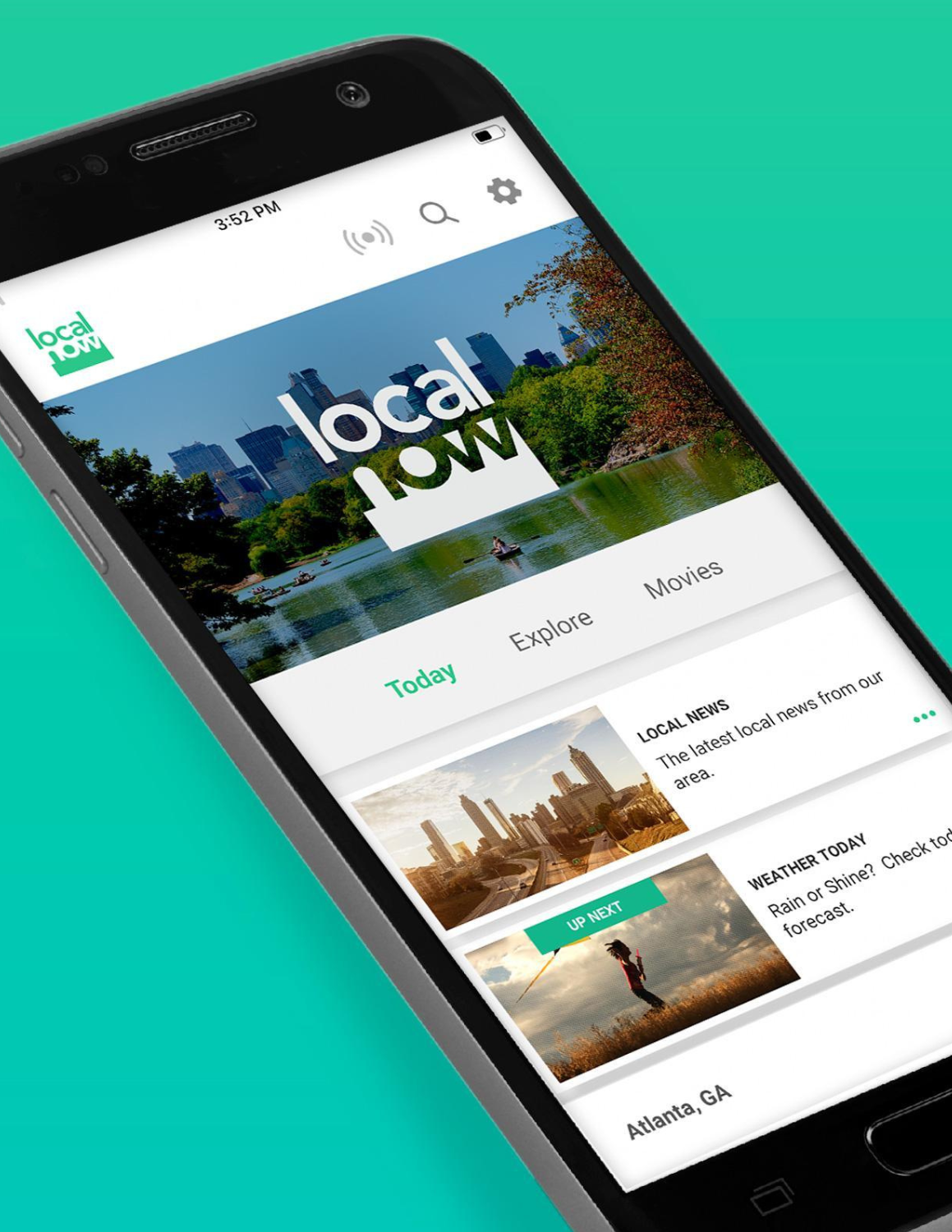
A national news & weather app sought to scale UA across a fragmented channel mix without inflating CPA. By rebuilding its measurement foundation and unlocking 8+ traffic sources, Neon Growth delivered 2.5x daily user scale at 31% below target CPA.

MagBak campaign creative
Winner
Scaled to 2,500 daily installs at 31% below target CPA
MeasuredFull-funnel results
AT A GLANCE
ClientNational News & Weather App
IndustryStreaming & Media
ServiceFull-Service Growth Marketing
ChannelsMeta · Google · DSPs · Ad Networks
Key ResultsScaled to 2,500 daily installs at 31% below target CPA

The Challenge

Plateaued New Users, Unengaged Traffic

A long time, publisher, our client's app had clear brand recognition: 230+ cities covered, major conglomerate backing, and a product users return to daily for local news and weather. But its user acquisition engine was underperforming. Daily install volume had plateaued well below target, CPA was exceeding acceptable thresholds, and new installs showed week engagement metrics.

The measurement infrastructure compounded the problem. MMP event mapping was incomplete, meaning optimization algorithms were firing on incomplete signals leading media to optimize toward lower-quality user actions that didn't reflect actual retention or value. Without clean measurement, scaling spend only amplified inefficiency.

There was also a creative gap. Existing ad creative skewed toward general news app messaging that didn't leverage the app's strongest differentiator: hyperlocal coverage of 230+ cities with real-time weather data. The result was high CPMs on audiences that weren't converting at acceptable rates. The challenge wasn't just channel diversification it was rebuilding the foundation (measurement, creative, channel architecture) to support profitable scale.

spike

The Strategic Insight

The Measurement Layer Was the Bottleneck

The root diagnosis was a measurement problem masquerading as a media quality problem. Optimization was firing on the wrong events - installs rather than meaningful retention actions. This meant bidding algorithms were acquiring users who installed but didn't stick. Until the measurement layer was fixed, no amount of channel diversification or budget increase would move the needle on sustainable scale.

The second insight was hyperlocalization as a creative lever. User research pointed to a consistent pattern: conversion rates correlated with how personally relevant the ad experience felt to the viewer. An ad showing real-time weather for the user's exact city outperformed generic news app messaging by a significant margin. The app's 230-city footprint was its moat and creative hadn't been built to leverage it. Dynamic, hyper-localized ad structures that matched ad content to the viewer's local market were the creative unlock the account needed.

Together, these insights set a clear execution path: fix the foundation first (MMP event mapping), then unlock creative scale (dynamic localization), then expand the channel mix from a position of strength.

The Execution

Our approach

01
Multi-Channel Expansion & Sub-Publisher Optimization

With measurement rebuilt and creative unlocked, the media strategy focused on systematic channel expansion. The team identified and onboarded 8 new traffic sources  spanning social platforms, performance ad networks, and DSPs. Each channel was evaluated through a structured test-and-learn framework before receiving meaningful budget allocation. No channel received scale without first clearing CPA and retention quality thresholds.

Sub-publisher optimization became the primary efficiency lever within ad networks and DSPs. Rather than accepting network-level performance, the team built granular blacklisting and whitelisting protocols based on downstream user quality signals. Publishers that drove installs at target CPA but produced low-retention users were cut. Those delivering users who completed onboarding and returned within 7 days were scaled. This combination of new channel access and rigorous supply-side optimization enabled the account to grow from a narrow social-first mix to a diversified 8+ source portfolio at lower CPA than any single legacy channel had achieved.

02
Dynamic Hyper-Localized Ad Creative

Neon's creative hypothesis was simple: relevance converts. A user in Phoenix responding to an ad showing Phoenix weather would outperform the same user seeing generic national news app messaging. The team built a dynamic ad creative architecture that matched ad content testing weather data, local news headlines, and city-specific imagery to the viewer's geographic location at the time of impression.

This wasn't a manual localization exercise. Creative templates were built to dynamically pull city-level data and generate contextually relevant variants at scale across 230+ markets. Testing confirmed the hypothesis: hyper-localized creative drove materially higher conversion rates than control messaging, with the greatest lift in mid-tier markets where the app had strong coverage but limited brand awareness. The creative system was designed to run efficiently with minimal ongoing production lift giving the media team a scalable weapon to deploy across new channels as the account expanded.

03
MMP Reconstruction & Downstream Quality Signals

The first month of the engagement were measurement-first. The existing MMP configuration had fragmented event mapping: installs were tracked accurately, but downstream events critical for optimization were miscategorized or missing. Data points like tutorial completions, content views, return visits held useful data for comparing traffic sources and training algorithms. This meant Meta, Google, and other platform bidding algorithms were optimizing toward install quantity, not user quality.

The team rebuilt the MMP event taxonomy from scratch: defining the exact user actions that predicted 7-day and 30-day retention, mapping each event correctly to the MMP, and establishing attribution windows appropriate for a daily-use app. Once downstream signals were clean, campaign optimization shifted from install volume to quality-weighted events. Within weeks, CPA came down and user retention improved. This foundation made every subsequent channel expansion decision more reliable and defensible.

Client Testimonial

The Results

2.5x Daily Scale. 31% Below Target CPA. Held at Full Spend.

2.5x

Daily Scale
Daily users scaled 2.5x from engagement start to peak, driven by 8 new traffic sources
x

2,500

Daily Installs
Reached 2,500 new app installs per day at peak performance over 12+ months
x

31%

Lower CPA
CPA came in 31% below the client's target benchmark and held as spend scaled
x

8+

New Channels
Onboarded 8+ profitable traffic sources including social platforms, ad networks, and DSPs
x

Over 6 months, this national news & weather app scaled from a narrow, underperforming channel mix to a diversified 8+ source UA engine delivering 2,500 new installs per day, which was 2.5x the volume at engagement start. CPA came in 31% below the client's target benchmark, a number that held as spend scaled rather than degrading with volume.

The biggest driver of efficiency gains was the sequencing. By rebuilding measurement before expanding channels, the team ensured that budget flowing into new traffic sources was guided by clean signals from day one. Sub-publisher optimization within ad networks and DSPs eliminated low-quality supply early, protecting CPA at scale. And dynamic hyper-localized creative gave the media team a durable asset that maintained conversion performance across new markets and new channels without requiring a proportional increase in creative production.

The engagement demonstrated a recurring pattern in app UA: when measurement infrastructure is weak, media optimization is fighting with one hand tied behind its back. Fix the foundation first and scale follows.

Case study Summary

Neon Growth scaled a national news and weather app's daily user acquisition 2.5x through a three-phase approach: MMP reconstruction, dynamic hyper-localized creative, and systematic 8-channel expansion. CPA came in 31% below the client's target benchmark and held at scale. The engagement shows that measurement infrastructure is the prerequisite for efficient paid UA growth.

Want results like these? Let's talk about your brand's potential.

Book a call →

Key Takeaways

What this engagement proved

1
Bad Measurement Costs More Than It Saves
Skipping proper MMP event mapping to move faster on media is a false economy. For this app, optimization algorithms were firing on the wrong signals for months — acquiring users who didn't stick. The 30 days spent rebuilding measurement paid back multiples in downstream CPA efficiency and user quality.
2
Hyperlocalization Is a Moat, Not a Production Problem
Dynamic creative that matched ad content to the viewer's exact city significantly outperformed generic app messaging — especially in mid-tier markets where the app had coverage but low awareness. Building a scalable template system made this a structural advantage rather than a one-time production effort.
3
Channel Expansion Only Works From a Clean Foundation
Adding 8 new traffic sources before fixing measurement would have distributed spend inefficiently across every new channel too. By sequencing correctly — measurement first, creative next, then expansion — each new channel inherited clean optimization signals from day one, compressing the learning phase and protecting CPA at scale.

Frequently Asked Questions

What was broken in the app's measurement setup, and how did you fix it?
The MMP had accurate install tracking but fragmented downstream event mapping. Events like tutorial completions and return visits — the ones that predict retention — were either missing or miscategorized. We rebuilt the full event taxonomy, matched each event to the MMP correctly, and shifted optimization targets from install volume to quality-weighted actions. Clean signals changed everything.
What types of traffic sources were added during the engagement?
We expanded from a social-heavy mix into ad networks and DSPs — 8 new sources in total. Each channel entered through a structured test phase with clear CPA and retention quality gates before receiving budget scale. No channel was added speculatively; every expansion was evidence-driven based on early performance data.
How did dynamic creative localization work at scale across 230+ cities?
We built creative templates that dynamically pulled city-level data — weather conditions, local news cues, city-specific imagery — at the time of impression. This enabled localized ad variants across 230+ markets without proportional production overhead. Conversion lift was strongest in mid-tier cities where coverage existed but brand awareness was lower.
How did you manage performance quality across ad networks and DSPs?
Sub-publisher optimization was central to CPA efficiency within programmatic channels. We tracked downstream user quality — not just install CPA — and built blacklisting and whitelisting protocols based on retention signals. Publishers driving installs at target cost but producing low-retention users were cut; those delivering quality users were scaled.

Improve marketing. Prove impact.

Bring your growth target and your biggest roadblocks. We'll show you where the next gains are.

Talk to a Partner →

Related Results

See all case studies →